
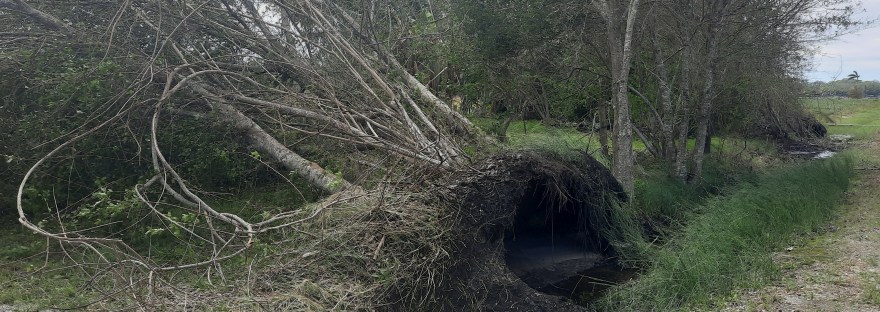
We have all just gone through a serious learning experience, Hurricane Ian has opened our eyes to the terrifying truth of how fragile our communities are. The agriculture community has been outspoken for years about the far-reaching impacts of mass development of our land into cookie cutter neighborhoods and large paved over developments. Clear cutting land, paving over the majority of it, and only requiring developers to take into account water retention for the property in which they are working on is failing our new climate norms. The fact that a 40-acre parcel can be raised 4 ft to meet new code and built to simply retain its own water but not deal with the traditional natural flow of water which now floods an intersection or a neighbor’s home is absurd. “Unfortunately, in the vast majority of cases, you are solely responsible for any water that drains onto your property, regardless of where it originates. In U.S. legal terms, this is known as the common enemy rule.”

So where do we go from here? If you have kept up with previous blogs, you know our agricultural community is aging out and communities are pushing ag away from the higher dollar property in the sprawling suburbs. This is taking control out of the hands of our most educated conservationist in your local communities and putting in the hands of developers and firms focused on profit margin. If you’re lucky enough to have a county with laws in place that require the preservation of legacy trees or minimum requirements to plant a certain percentage of natives in new developments, you have a chance. There is a very high chance you live somewhere that doesn’t have these rules in place in which case you live somewhere that cannot handle rain fall, helping prevent run off, pollution, erosion, and slow the impact of storm winds.
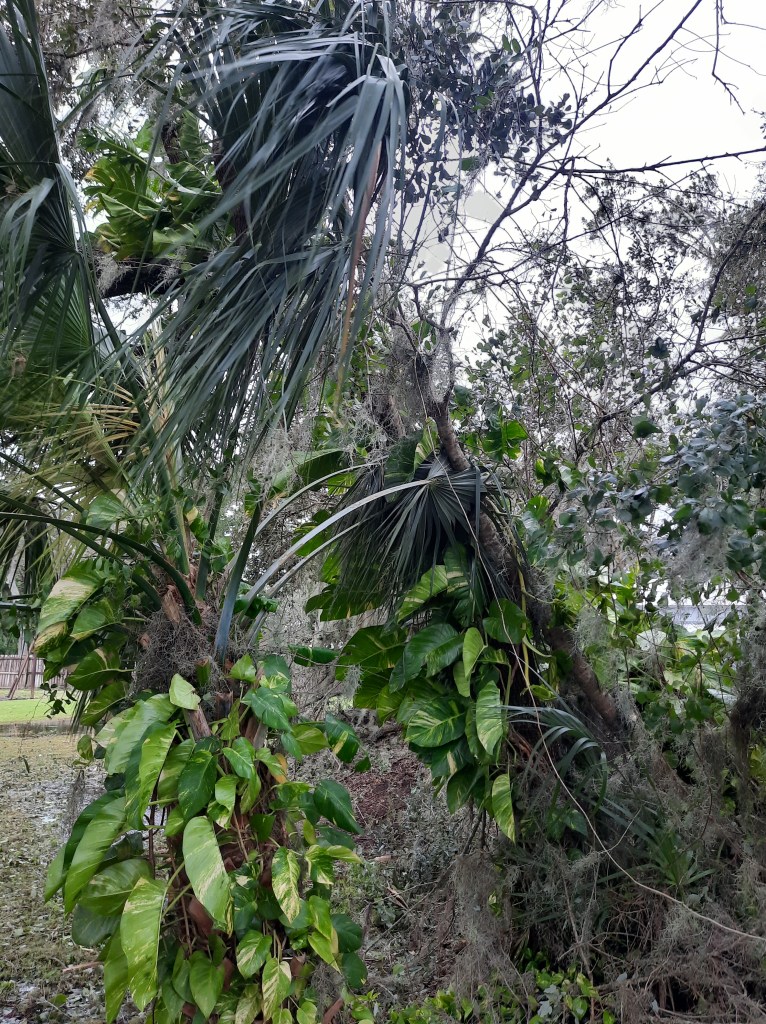
What do we do… it’s a helpless feeling. Seeing our friends in FT. Myers after this storm surg was something that could not be avoided, Ian was a truly powerful storm with a devastating landfall track and location. The sheer size of Ian is what really shocked the state however “with Ian’s tropical storm-force winds extending 175 miles from it’s center” homeowners witnessed wind devastation across Florida. So, what does land development and the force of this storm have in common? How can we help ourselves? What do we do?
Plant a tree! There is a saying, we love, and it can pretty much go on forever.
If it’s too hot… plant a tree
If it’s too windy… plant a tree
Need to protect and retain water… plant a tree
Soils in need of repair… plant a tree
Need erosion prevention… plant a tree
Need clean air to breath… plant a tree
The best time to plant a tree was 20 years ago, the second best time is today.
So why are we going on about storm damage and trees? Did you know a tree can protect an object from wind up to 2.5 times the trees height away from itself! You’re probably asking now about all the trees that fell onto houses, well there is a science to trees and tree planting, and we are being literal this isn’t a figure of speech. Tree arborists are professionals when it comes to anything trees. You should contact any tree arborist in your area who is certified and has good recommendations, we of course would also choose an FNGLA member. Check out this quick article from Texas A&M on some quick points about the science of trees, when to plant, where to plant, why to plant, what kind to plant.

Getting a professional arborist to come and make a plan for your property that will help make it storm ready and safe, to help select trees that will shade your house in the summer and warm it in the winter is an investment we should all be making. Trees can do more than just look good and provide shade, they can help reduce damaging winds impacting your home when a large storm makes an unexpected turn and if they are properly planted in groups the trees will have a much higher probability of surviving the damaging winds themselves. There are a great variety of trees out there, some faster growing so they will truly have an impact on protecting your property while you are still the owner.
I am currently reading A Sand County Almanac by Aldo Leopold, a great read for deep thought while looking into your garden or any landscape that inspires you. There is a quote that is very powerful and ties together the feelings of loss from this storm but also hope for our future.
“Acts of creation are ordinarily reserved for gods and poets, but humbler folk may circumvent this restriction if they know how. To plant a pine, for example, one need be neither god nor poet; one need only own a shovel. By virtue of this curious loophole in the rules, any clodhopper may say: Let there be a tree and there will be one.” Aldo Leopold, A Sand County Almanac.
We hold the power in our hands if we would just educate ourselves, reach out for help, make a choice to ensure for ourselves but more importantly for our future that we are protected in our community. Maybe this looks like going to a county meeting to ensure we have laws on the books to save our larger legacy trees but also make it law that natives are being used in landscapes. Natives have deeper root systems that can sequester water. They can handle the drought which means when the rain does arrive the plant is alive and ready to hold that rainwater deep in the ground rather than run it off to a drainage pond that can overflow. Trees if, properly chosen and, planted correctly can create steady air pressure around your home that will deflect violent winds from large storms. Speak to a professional, work on your landscape, not just for the beauty, relaxation, health benefits, or increased property value but rather for the protection of your home and your community around you. With a shovel as your weapon, use the natural defenses mother nature has given you to protect your family against her most ferocious attacks.

 The Veranda View