

In 2023, Florida voted in a new Commissioner of Agriculture, Wilton Simpson. Commissioner Simpson is a 5th generation Floridian and a lifelong farmer. His passion for agriculture and the state of Florida truly radiates whenever you’re around him. One of Commissioner Simpson’s driving mission is to educate the nation on the potential future of a food crisis. “So there’s nothing more important in this country than our food supply and recovering from a hurricane if you’re in the state of Florida. And I always put in a national security term because, think about this for a second- you know, in national security, we think of oil. We’re fighting wars in the Middle East that last 50 years over oil and we have strategic supplies all over this country because we know it is a national security issue. Think of your food supply- just one week, no groceries in the grocery store. Right? You have chaos in this country in less than a month; you’d have people starving in this country. “ – Wilton Simpson October 31st, 2023. Having a vast variety and quantity of food throughout the grocery store all year long, we as Americans, are truly spoiled. We currently have a stable food supply, but it is one on the verge of collapse in the next generation if we aren’t careful. In previous blogs, we’ve discussed issues facing both Manatee County and Florida. When we think of the biggest challenge facing agriculture, many think of developments and overbuilding of houses. Mainly, because that is what we see in Florida, but across the nation, there’s another issue, and it’s brewing……

When we think of the American dream, our minds quickly run to the image of our forefathers farming, as agriculture is the backbone of America. Unfortunately, we aren’t the only ones who have noticed. Foreign interest in U.S. Agricultural Land isn’t something that’s new, but it is increasing at an alarming rate. AFIDA, Agricultural Foreign Investment Disclosure Act was put into law in 1978. This Act was created to establish a system to record information regarding foreign ownership in the U.S. This law requires foreign investors who acquire, transfer, or hold agricultural land in the U.S. to report it to the Secretary of Agriculture. In 1978, only 5.6 million acres of agricultural land were owned by foreign investors. In the latest study, 43.4 million acres are owned by foreign entities. To put it in perspective, that’s is more land than the ENTIRE state of Florida in acreage. We have basically sold an entire state to other nations.

So who is buying all this land? The majority of ownership of land are Canadians (32%) followed by the Netherlands (12%). Italy (6%), UK (6%), and Germany (5%). In recent years, Chinese ownership has become a concern. Although they own around 1 percent of foreign-held agricultural land, we know that China has been determined to be a “foreign adversary” by the U.S. Secretary of Commerce. “Over the years, I have witnessed this hostile communist country work to systematically take over more of America’s vital food supply chain,” South Dakota Governor, Kristi Noem has recognized and raised the flag of concern.
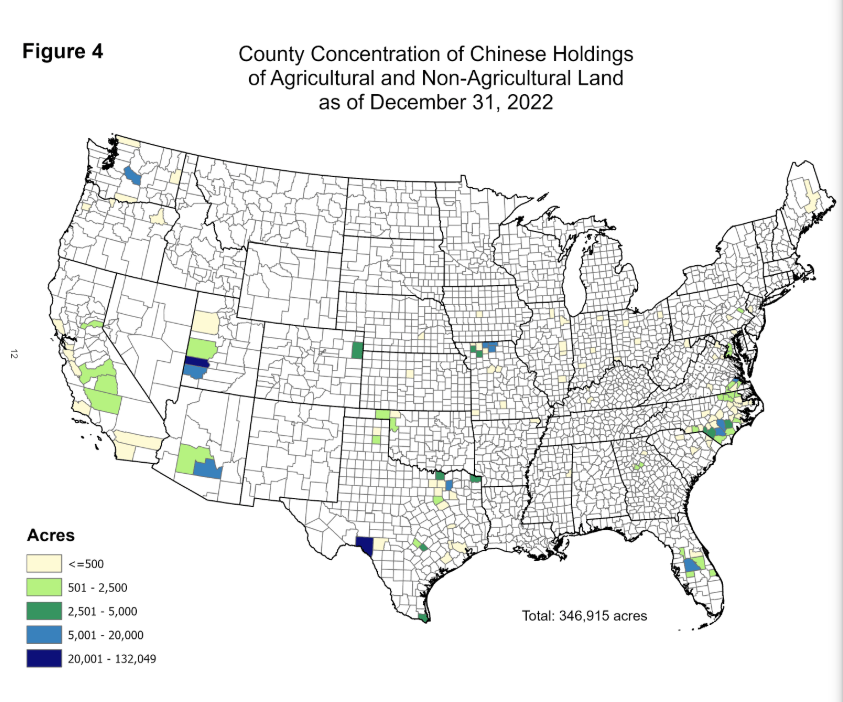
She’s not the only one though, 24 states have created some sort of state laws that seek to restrict foreign land ownership. Indiana first created a bill in 2022 that limited the amount of acreage a foreign entity could own but has since updated their legislation (beginning July 1, 2024) to be one of the most stringent laws on foreign ownership, defining a “prohibited person as a citizen of China, Iran, North Korea, Russia, or a country designated as a threat to critical infrastructure by the governor.” Florida is another lead player against foreign land ownership enforcing it on July 1, 2023. This bill includes more countries that cannot own or hold land such as the Republic of Cuba, the Venezuelan regime, and the Syrian Arab Republic. One thing to note is Florida’s SB 264 exempts foreign landholders who purchased before July 1, 2023. They still have to report each year or there is hefty daily penalty. It’s seen some recent push back from Chinese land owners in Florida, read more here.
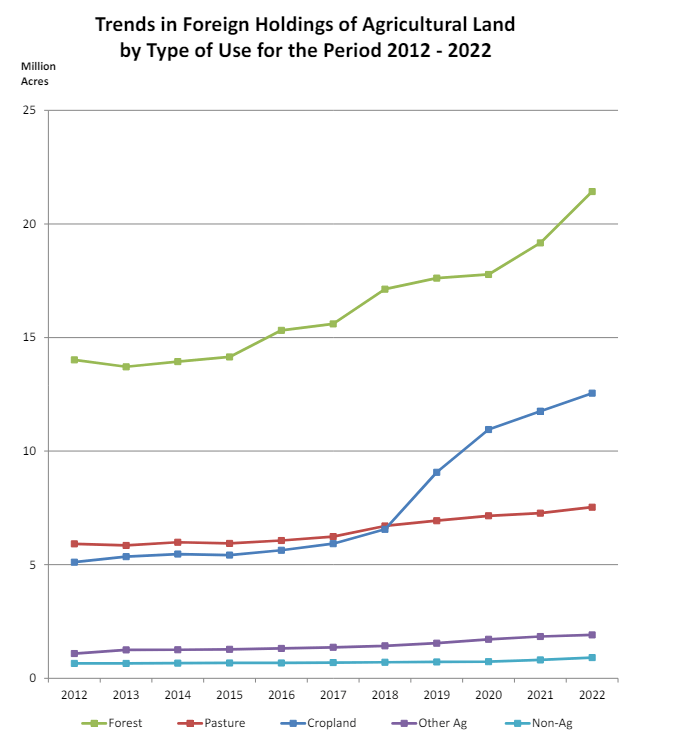
While the news may be focused on if the nation will be banning Tik Tok or not, the issue of foreign adversary’s owning agricultural land is real and honestly, flying under the radar. Currently today, there are no federal laws that combat this issue. Thankfully, half of the U.S states have recently recognized the concern and have sprung into action. Hopefully the United States government will one day see that we are at the tipping point for agriculture. Farmers and Ranchers face many issues such as Mexico flooding the market due to NAFTA, national disasters, over development, increased land prices, inflation, aging farmers, and more. Add another concern on the plate for both farmers & citizens as foreign land ownership has peaked, owning 2% of all the land in the United States. For instance, if you read a headline that said ” United States Government sells the state of Florida to 5 different countries” And then, further down the article it read “these countries will employee local citizens, but the agricultural and natural resources will be shipped to these foreign countries, with none going back to American citizens,” a red flag would come across your mind. It’s easy to be distracted and not see what’s happening in the U.S. with so many other issues plaguing the news. Foreign Landownership is just one branch of the food security issue in the U.S., and should be recognized as a true national security issue within the next decade, before it becomes a crisis.
| AFIDA Study Year | Amount of Acres in Foreign Holdings/ Ownership | Percent of Private Ag Land in Foreign Holdings/Ownership | Percent of all land in the U.S. |
| 1978 | 5.6 million acres | .5% | .25% |
| 2004 | 14.6 million acres | 1% | .65% |
| 2014 | 26.7 million acres | 2.1% | 1% |
| 2018 | 31.8 million acres | 2.5% | 1% |
| 2022 | 43.5 million acres | 3.4% | 2% |
Want more blogs like this straight to your email? Subscribe today! We would truly appreciate your support of our agriculture advocacy mission.
-Written by Janyel Taylor

 The Veranda View
Not only land, but companies! China owns Smithfield—so I do not buy their products. People need to be smart and food aware—who owns the farms and the foods you purchase for your family? Thanks for putting this up John—too many people are so uniformed!
LikeLike
Yes!! I almost included the Smithfield issue! Maybe that will be another blog. 😉😏
LikeLike