
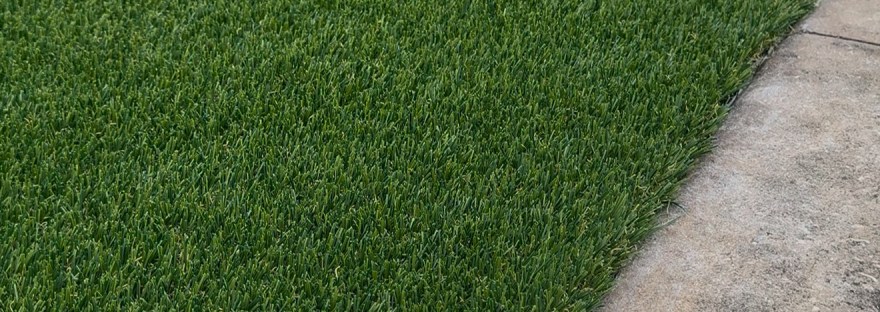
As a kid growing up in the 90’s what I remember about the summer heat was avoid all surfaces outside when barefoot and tip toe as fast as you could back to the grass. Today in some Florida homes, that grass isn’t what it used to be. Artificial turf has gained popularity in recent years, which is just one more environmental nightmare for Florida.
Artificial Turf first made it’s appearance as a concrete replacement in playgrounds, but found it to be financially unfeasible, which is why installation took off in athletic fields, starting with the Houston Astrodome. Now it is currently in 15 NFL Stadiums, but what’s more concerning is the amount of artificial turf being installed in youth sporting facilities, community parks, parking lots, and even dog parks.
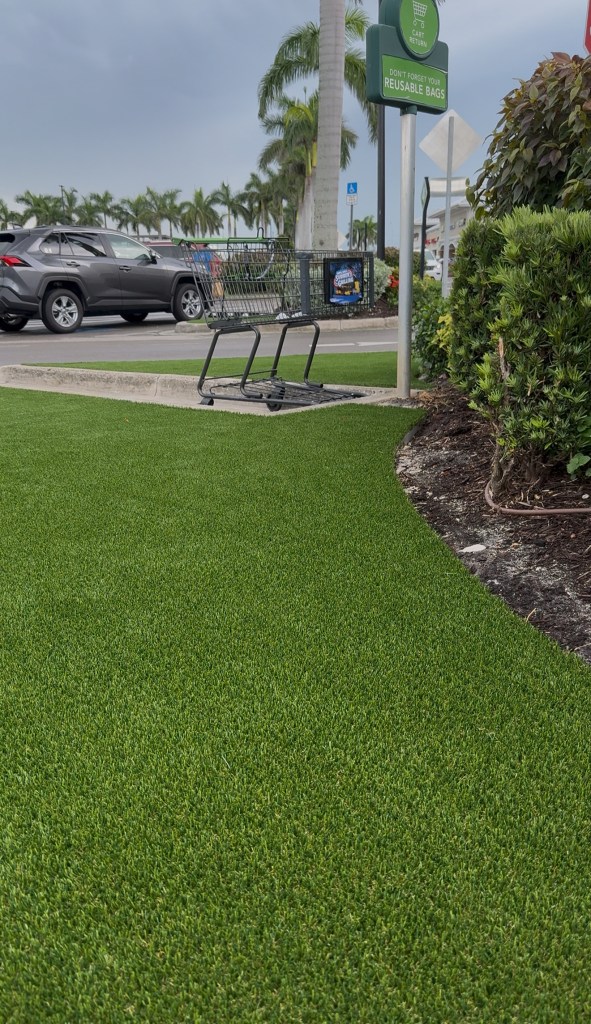
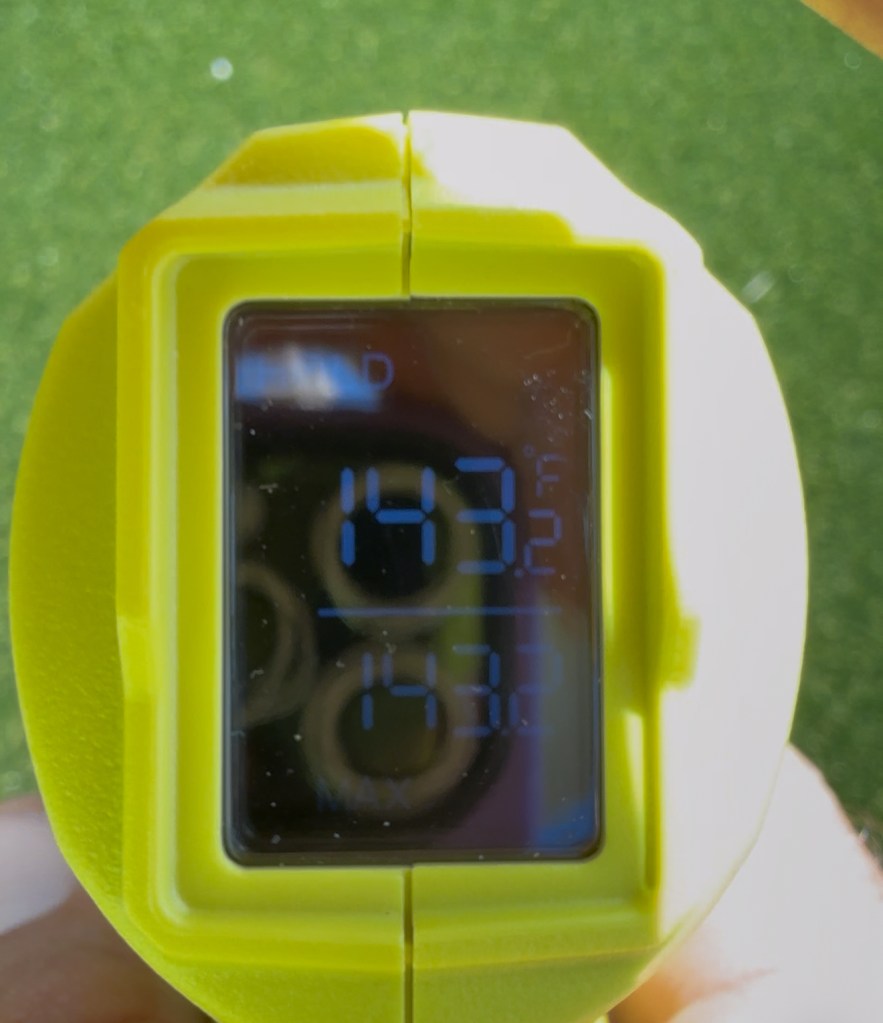
One issue with artificial turf is its ability to generate heat. Not just any heat, but when compared to natural grass, concrete, and even asphalt, the temperature of artificial turf raises the thermometer by 15-30 degrees above those other surfaces! What’s disappointing is, the producers of artificial turf know this fact, yet they still advertise it as a viable option for Florida yards. Straight from Pro Green Synthetic Turf System’s website, “It’s no surprise that artificial grass surfaces can get significantly hotter than natural grass. In direct sunlight, artificial turf can heat up to 150 degrees Fahrenheit, a stark contrast to the cooler temperatures typically reached by natural grass.” You may be thinking, okay so don’t walk on it during the middle of the day, but here’s the real kicker. Artificial turf stores and radiates heat back into the environment well into the evening which is now raising the night time temperatures, exasperating the urban heat island effect. Tampa recently hit 100 degrees for the first time, and it’s only going to get hotter.
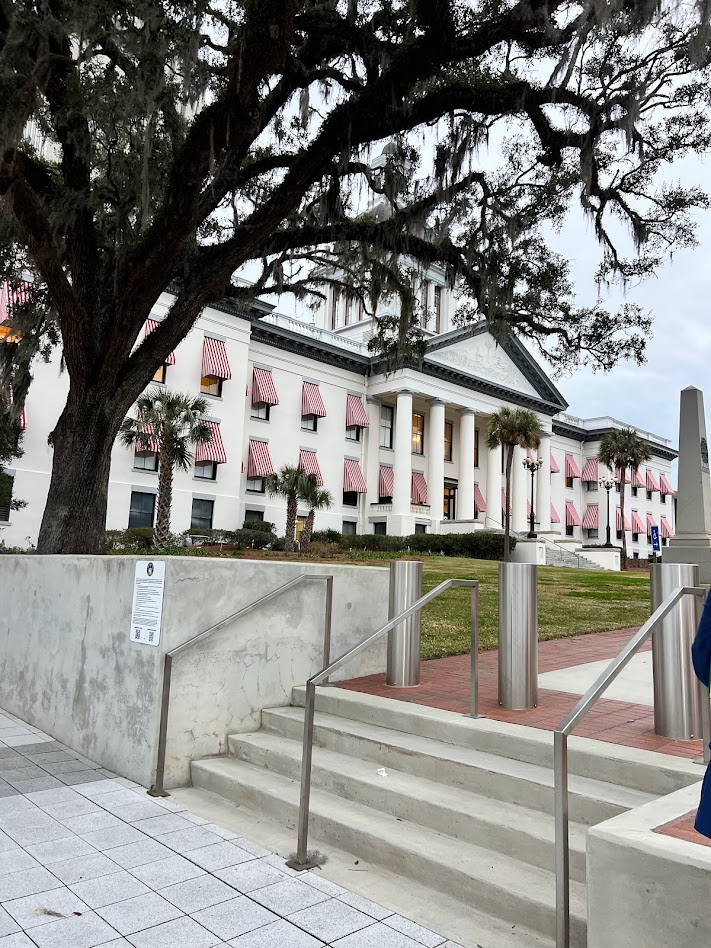
This past June, House Bill 683 was signed into Law by Governor Ron DeSantis. This bill “prohibits local governments from adopting or enforcing any pronouncement that prohibits, or is enforced to prohibit, property owners from installing synthetic turf meeting certain requirements.” Well, DEP’s developing those standards right now, yet this bill shouldn’t have happened in the first place. This bill goes against Florida State Statute 373.185
” (a) The Legislature finds that the use of Florida-friendly landscaping and other water use and pollution prevention measures to conserve or protect the state’s water resources serves a compelling public interest and that the participation of homeowners’ associations and local governments is essential to the state’s efforts in water conservation and water quality protection and restoration.”
Better yet, according to the Landscape Irrigation and Florida Friendly Landscaping Design Standards, “Artificial turf should not be used in a Florida-Friendly Landscape. Artificial turf
does not provide ecological benefits, reduces soil health and may leach pollutants. ” State Statute urges local governments to follow Florida-Friendly Landscape standards, standards that don’t approve of synthetic turfgrass, but soon, local governments won’t be able to prohibit synthetic turf. This snowball effect takes government overreach to the next level. Artificial turf is red flag for Floridians contributing to urban heat islands, run-off, pollutants, and more. This is just one more environmental turd that the state will face repercussions on in the future. If you want to learn more, read Synthetic Turfgrass and the Nine Principals of Florida-Friendly Landscaping.
What else could possibly be wrong with synthetic turf? Well….. actually quite a bit:
- PFAS Migration- When water hits the synthetic turf it leaches PFAS (forever chemicals) into local bodies of water, including spreading more microplastics. According to a study in Spain ” showed that artificial turf fibers comprised up to 15% of plastic debris in aquatic environments.” That’s in ONE country! The U.S. is about 20 times larger than Spain, which means even more microplastics.
- Athlete injuries– Lower body injuries occur more on synthetic turf. The soil under natural grass has some give, synthetic turf does not. “An NFL study assessed more than 4,800 NFL foot and leg injuries during regular season games between 2012-2016. It found that, had every game been played on a grass surface, at least 300 fewer foot and leg injuries would have been expected.”
- Short Life Expectancy– Synthetic turf lasts between 8-10 years and then it needs to be replaced. Unfortunately, most of the material cannot be recycled again and ends up being an environmental nightmare at your local landfill.
Alternatives
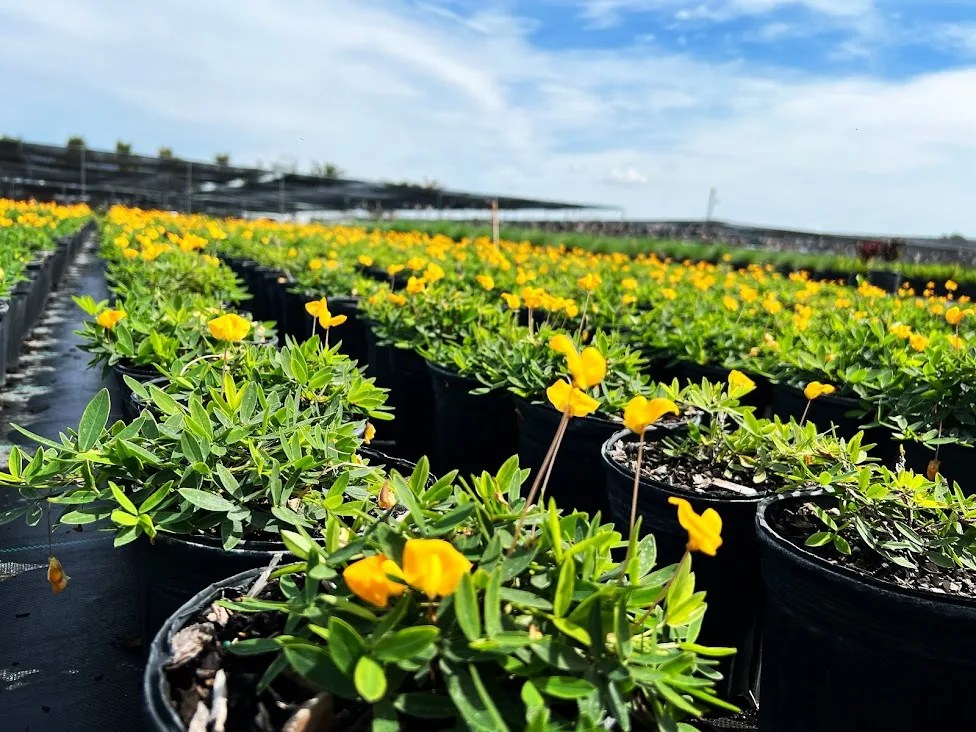
Groundcovers are a great choice for areas you want low maintenance! From Native Porterweed, Mimosa, Perennial Peanut, and Minima Jasmine, these are all great alternatives to synthetic turf. Especially in parking lots, driveways, round-abouts, or other areas that need a reduction in maintenance. Check out our YouTube video on our recent installation of groundcovers in a Bradenton Roundabout! At the end of the day, it is up to you, the homeowner/business owner, to make the conscious decision to protect Florida’s fragile ecosystem. Artificial turf may promise convenience, but its long-term costs—to our health, environment, and communities—are too great to ignore.
What can you do?
Your voice matters. Whether you’re a parent, athlete, educator, doctor, environmentalist, or concerned citizen—stand with us to protect our environment.
📢 Demand change. Contact your local school boards, city councils, and legislators. Share the science. Show up at meetings. Submit your comments on the Department of Environmental Protection draft standards that coincide with House Bill 863 by August 19th, 2025. Find more information here! Email comments to: DWRA.Rulemaking@FloridaDEP.gov
📍 Together, we can reclaim safe, green spaces—free from plastic, pollution, and an environmental nightmare.
-Written by Janyel Taylor & Edited by John Taylor


1 thought on “Synthetic Turf, or Synthetic Turd?”